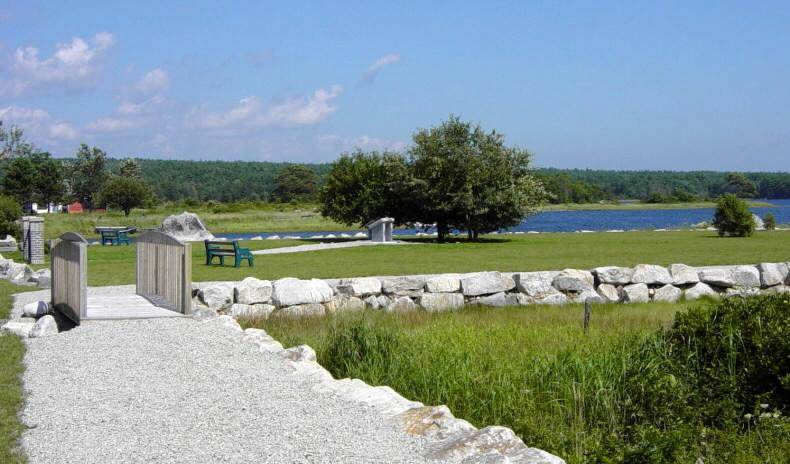
Birchtown Black Loyalists
1783
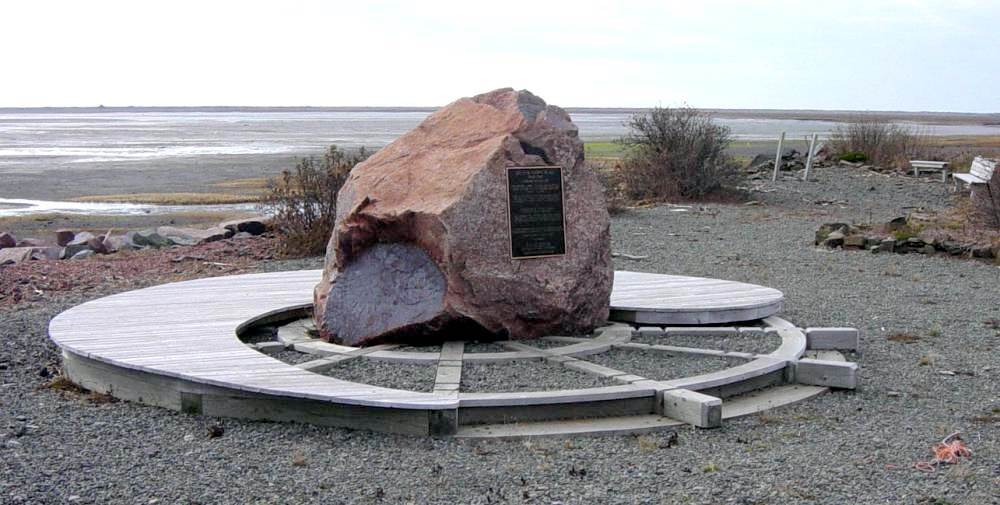
Photographs of Memorial
Birchtown Shelburne County Nova Scotia
GPS location: 43°44’42″N 65°22’47″W
Most Black Loyalists in New York at the end of the American Revolution were evacuated to Nova Scotia with the bulk of other Loyalists. There were roughly 4000black refugees brought to Nova Scotia in1785. The community of Birchtown had about 1,500people and at the time was the largest community of free blacks outside Africa…
Source:
http://www.americanrevolution.org/blackloyalists.html
When the end (of the American Revolution, 1776-1783) came, the top British
commanders kept their word to the King’s Black soldiers. In November 1782,
Britain and America signed a provisional treaty granting the former colonies
their independence. As the British prepared for their final evacuation, the
Americans demanded the return of American property, including runaway slaves,
under the terms of the peace treaty. Sir Guy Carleton, the acting commander
of British forces, refused to abandon black Loyalists to their fate as slaves.
With thousands of apprehensive blacks seeking to document their service to the
Crown, Brigadier General Samuel Birch, British commandant of the city of New York,
created a list of claimants known as The Book of Negroes…
Source: A Monument to George Washington’s Slaves
http://www.blackcommentator.com/washingtons_slaves.html
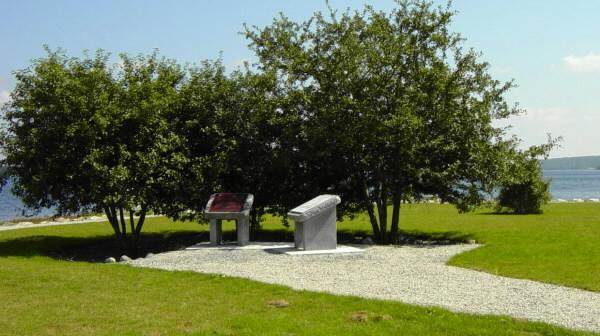
Photographed on 19 August 2003
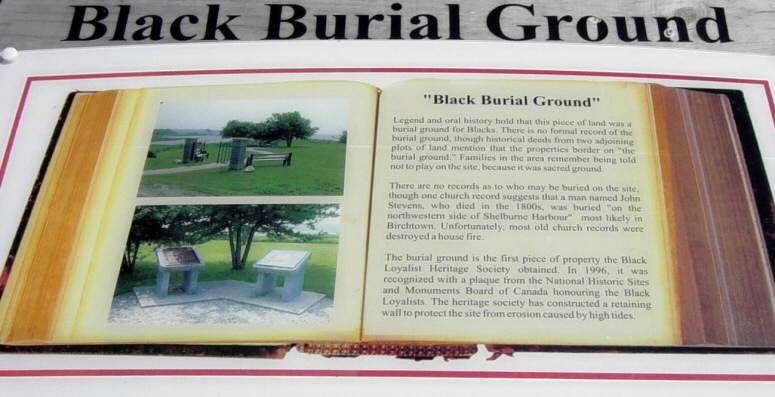
Photographed on 19 August 2003
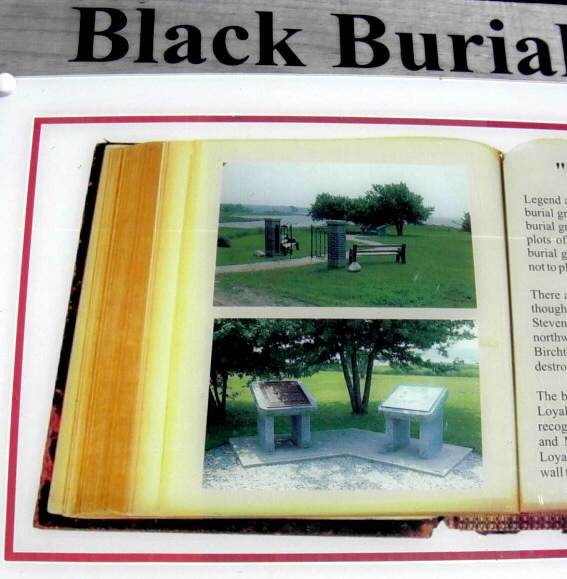
Photographed on 19 August 2003
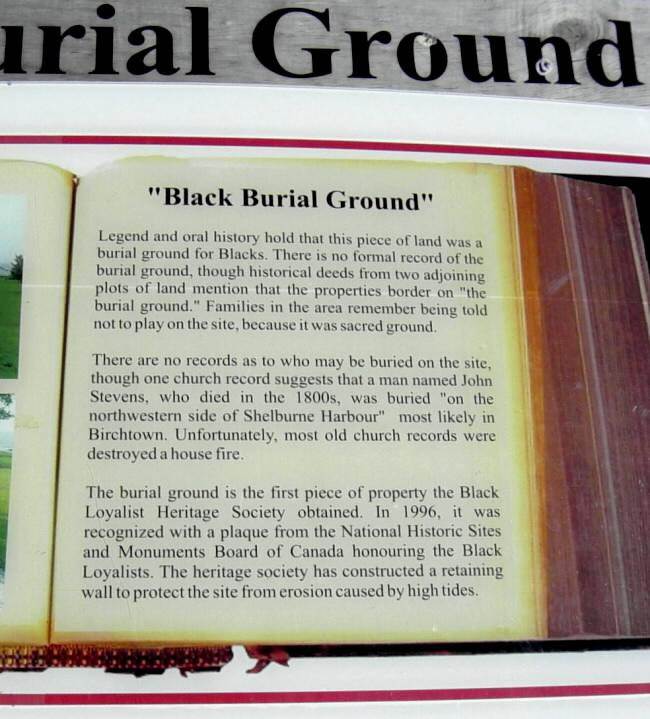
Photographed on 19 August 2003
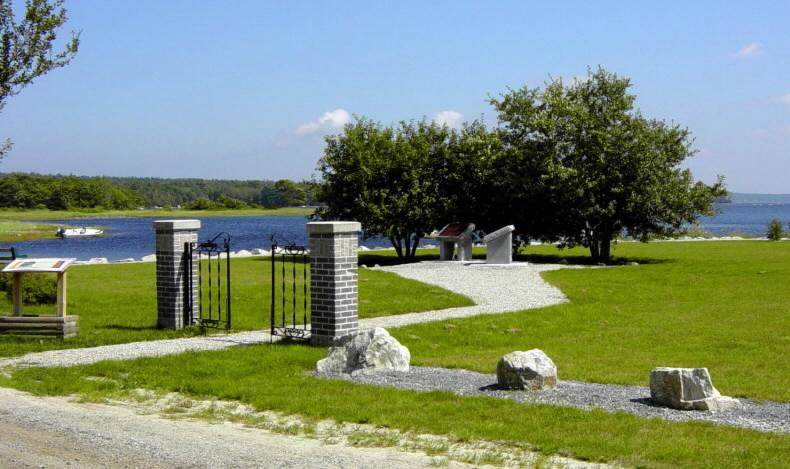
Photographed on 19 August 2003
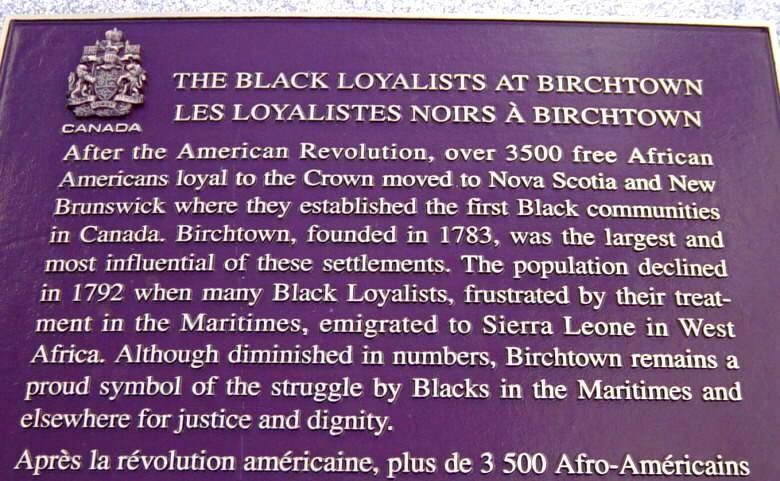
Plaque upper half (above), lower half (below)
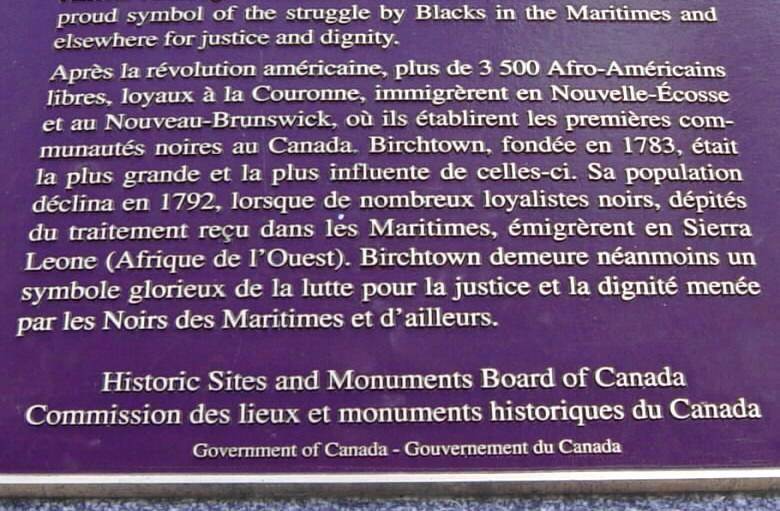
Photographed on 19 November 2002
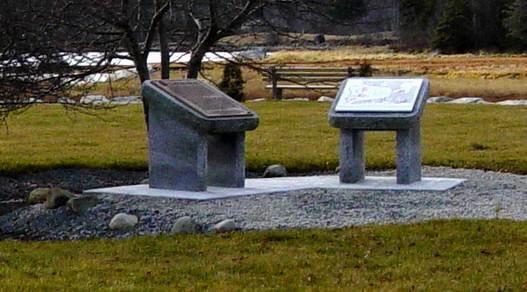
Photographed on 19 November 2002
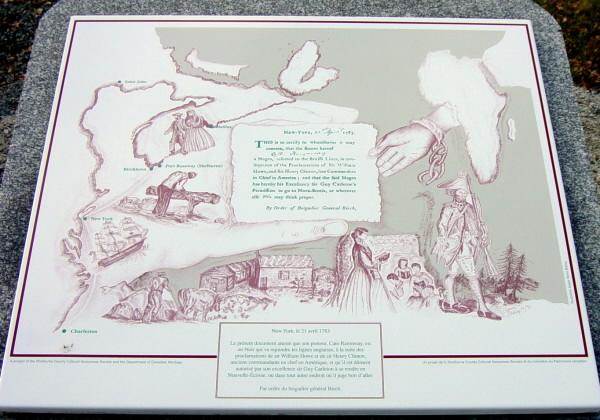
Photographed on 19 November 2002
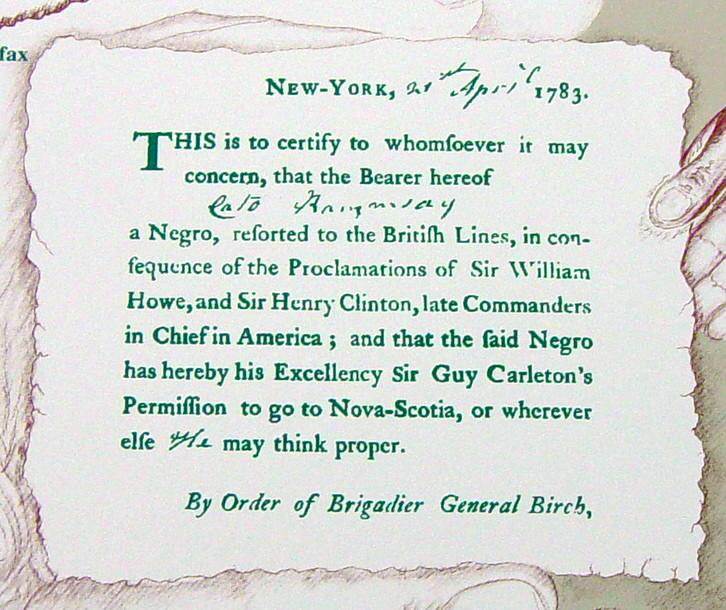
Photographed on 19 November 2002
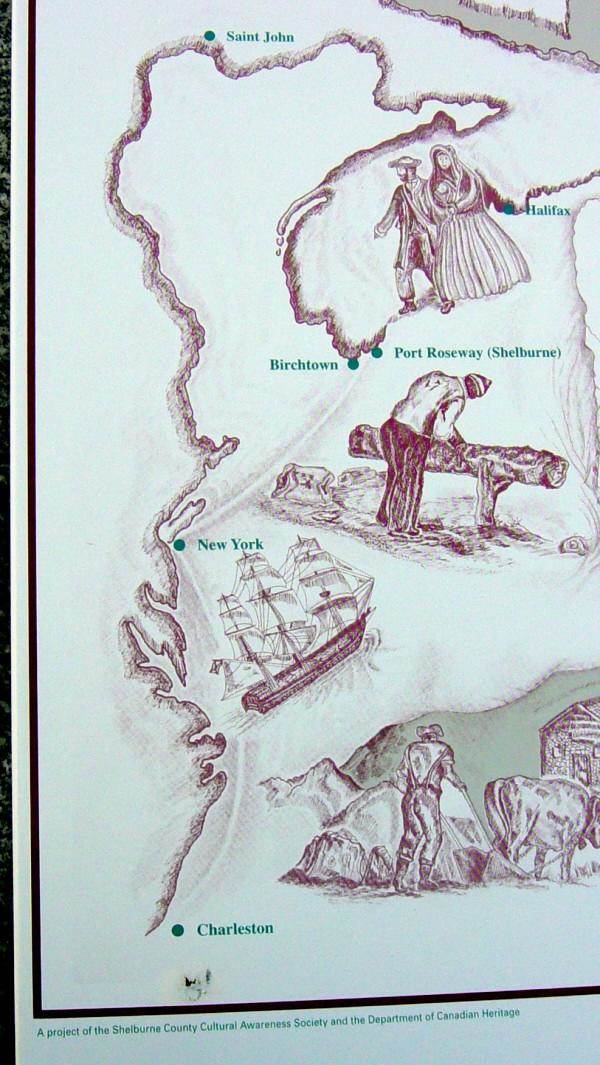
Photographed on 19 November 2002
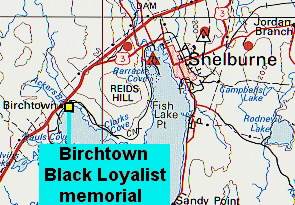
Map showing the location of the Black Loyalists memorial
Birchtown, Shelburne County, Nova Scotia
Photographed on 19 August 2003
Thanks to Ms. Rosalie Selig.
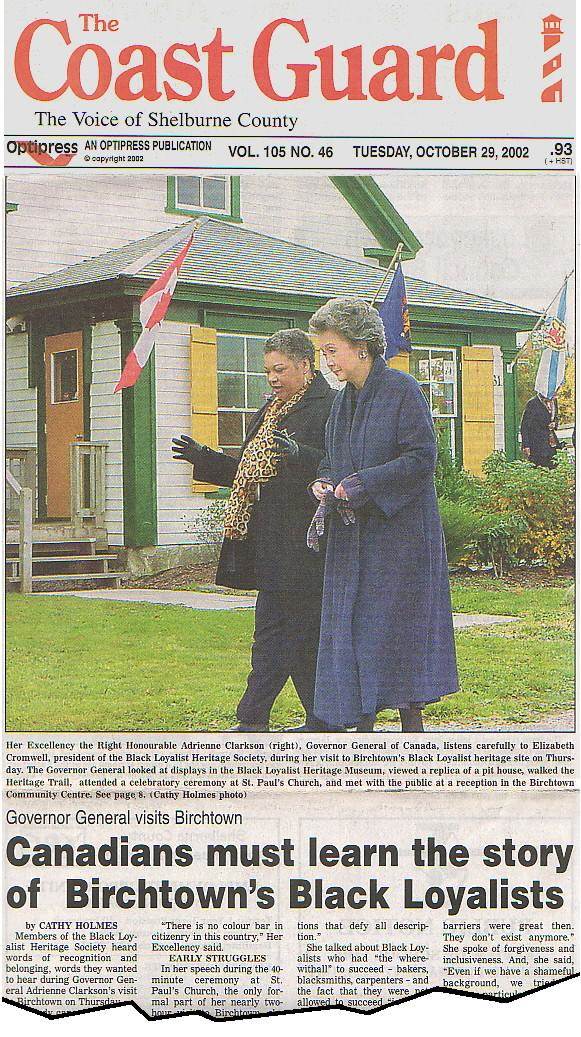
— The Shelburne Coast Guard, 29 October 2002
Black Loyalist Heritage Society
http://www.blackloyalist.com/
Birchtown Home to First Black Heritage Site
http://www.gov.ns.ca/news/details.asp?id=20000128002
Birchtown Plaque
http://nsgna.ednet.ns.ca/shelburne/main/BirchtownPlaque.php
Birchtown Archaeology
http://museum.gov.ns.ca/arch/sites/birch/
Black Loyalist History
http://nsgna.ednet.ns.ca/shelburne/main/BlackLoyalistHistory.php
Boston King Boston King was one of the many enslaved African Americans,
perhaps as many as 100,000, who risked punishment and even death to reach
the British lines and a chance at freedom … Boston, along with others, formed
a black community in Birchtown, six miles outside of Shelburne, Nova Scotia…
http://www.pbs.org/wgbh/aia/part2/2p60.html
A Monument to George Washington’s Slaves
When the end (of the American Revolution, 1776-1783) came, the top British
commanders kept their word to the King’s Black soldiers. In November 1782,
Britain and America signed a provisional treaty granting the former colonies
their independence. As the British prepared for their final evacuation, the
Americans demanded the return of American property, including runaway slaves,
under the terms of the peace treaty. Sir Guy Carleton, the acting commander
of British forces, refused to abandon black Loyalists to their fate as slaves.
With thousands of apprehensive blacks seeking to document their service to the
Crown, Brigadier General Samuel Birch, British commandant of the city of New York,
created a list of claimants known as The Book of Negroes…
http://www.blackcommentator.com/washingtons_slaves.html
Waves of Black Pioneers: Slavery in Canada and the First Wave
If one were to ask if Canada ever had slaves, many Canadians would respond
with an indignant ‘no’, yet we did have slaves for a period of about 20 years.
When the American colonies fought for freedom from British rule between 1775
and 1793, colonists who swore loyalty to the British Crown were offered land
in Canada and provisions. Thousands of American colonists who took advantage
of the British offer left the colonies in the south and in New England and headed
north where the only established British colonies were in the eastern part of
the new land. The Loyalist pioneers arrived in Halifax by shipload, carrying
with them whatever possessions they needed to start their new life.
About 2,500 indentured servants and slaves were part of that ‘baggage’…
http://highway7.com/t_culture/culture_0402_black_heritage2.html
Black Loyalists “Most Black Loyalists in New York at the end of
the war were evacuated to Nova Scotia with the bulk of other Loyalists.
There were roughly 4000 black refugees brought to Nova Scotia in 1785.
The community of Birchtown had about 1,500 people and at the time was
the largest community of free blacks outside Africa…”
http://www.americanrevolution.org/blackloyalists.html
Monument at Birchtown Nova Scotia Museum
http://museum.gov.ns.ca/blackloyalists/19002000/Places1900/birchtown.htm
Geomatics at Birchtown
http://museum.gov.ns.ca/arch/sites/btown/pages/gis.html
The Goulden Map
http://museum.gov.ns.ca/arch/sites/btown/pages/gis/goulden.html
Building on History: Black Loyalist in Nova Scotia
The Nova Scotia government is looking for a place to put a landfill…
http://bbi.ns.ca/Newsletters/Summer%201998/BLACKLOYALI.htm
Birchtown, Shelburne County Heritage Community
Much of the world is still unaware of the drama that unfolded so many years ago in the small village of Birchtown in Shelburne County, Nova Scotia. Today, people in that and neighbouring communities are working to make that story more widely known.
The general story of the United Empire Loyalists is well known: in the wake of the American Revolution in the 1780s, thousands of people from the former Thirteen Colonies chose to flee to Canada to start life again under the British flag. In the mid-1780s, about 10,000 of these people came to the Shelburne area. Of these, about 1,500 were former slaves, largely from Georgia and the Carolinas, attracted to the British side by the promise of freedom and land.
These Black Loyalists settled at Birchtown, just a few kilometres west of Shelburne. Life in those first few years was hard enough for White Loyalists, but for Black Loyalists, the situation was even worse. Many arrived in autumn, and spent the winter in tents or makeshift huts. They had been promised land, but most received none…
[Coastal Communities Newsletter, Vol.6 #4, March-April 2001]
http://coastalcommunities.ns.ca/v6_i4.html#cp